


In recent years, the growing emphasis on infection control in medical institutions worldwide, coupled with the upgrading of medical infrastructure in developing countries, has jointly driven the steady expansion of the surgical glove market.
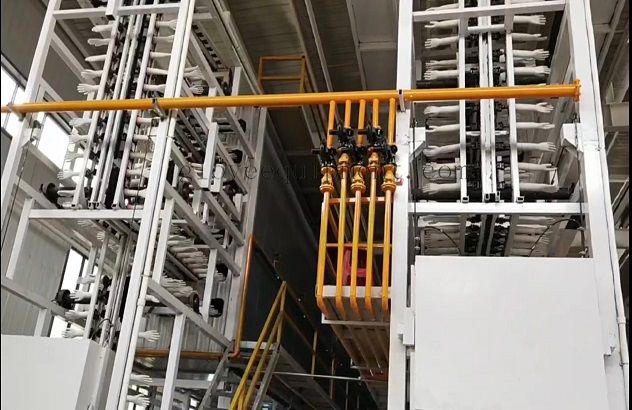
Differences Between Ordinary Glove Production and Surgical Glove Production
Compared to the dipping process for ordinary gloves, surgical glove production requires a two-step dipping process—the first dipping creates a textured surface on the fingers, while the second dipping completes the overall molding. This process ensures that surgical gloves provide a stable grip on instruments while maintaining finger sensitivity.
1. Surgical gloves are designed for left and right hands separately, requiring precise fit when handling instruments during surgeries.
2. Surgical gloves have higher mechanical performance requirements, particularly in terms of tear resistance.
3. Surgical gloves must undergo sterilization and are packaged in pairs as sterile, individually wrapped units to meet aseptic surgical standards.
4. Surgical gloves are longer than ordinary gloves, typically ≥250-270mm (sizes 6-8), to prevent contamination.
5. The finger portions of sarung tangan pembedahan need to be thin to maintain tactile sensitivity, while the cuffs must be thicker for ease of donning and secure fastening.
Cost Composition of a Surgical Glove Production Line
A complete surgical glove production line is highly technology-intensive and requires significant investment. The main cost components are as follows:
1. Yang dipping line, which is the core production equipment, consists of dipping tanks, drying tunnels, and transmission systems, accounting for 35%-40% of the total cost.
2. The mold system refers to the complete set of specialized glove molds for left and right hands in various sizes, accounting for 15%-20% of the total cost.
3. Vulcanization equipment, a critical step in latex vulcanization, accounts for 10%-20% of the total cost.
4. Packaging equipment for surgical gloves, including inner bag packing machines, sealing machines, and outer packaging lines, accounts for 10%-15% of the total cost.
5. Post-treatment lines, including chlorination cleaning, neutralization, and drying processes, account for 10%-12% of the total cost.
6. Glove testing equipment, including air tightness tests, tensile tests, and aging tests, accounts for 8%-12% of the total cost.
Key Profit Drivers for Glove Manufacturers
1. Raw materials: Controlling raw material costs is essential to reduce overall glove costs. Latex prices are highly volatile, so it is recommended to sign long-term contracts with suppliers to lock in prices.
2. Developing high-value-added products: Examples include gloves with anti-allergic coatings or those designed for minimally invasive surgeries, which offer higher profit margins.
3. Increasing automation: Reducing manual intervention in production lines helps lower glove production costs.

 Malay
Malay  English
  Arabic
  Hindi
Hindi  Tamil
Tamil  Thai
Thai